Ben Schwarz · 25 October 2026
How Timing of Network Connections Shapes Authority Signal Flow in Platform Ecosystems
Platform ecosystems rely on connections between nodes such as websites, applications, and user accounts, and the precise timing of those connections determines how authority signals move through the system, according to multiple network analyses conducted over the past five years. Authority signals include metrics like referral patterns, engagement indicators, and linkage data that platforms use to assign value and visibility. When connections form during periods of high activity or in specific sequences, the signals travel farther and with greater strength than when they occur at random intervals or during low-traffic windows.
Mechanics of Connection Timing
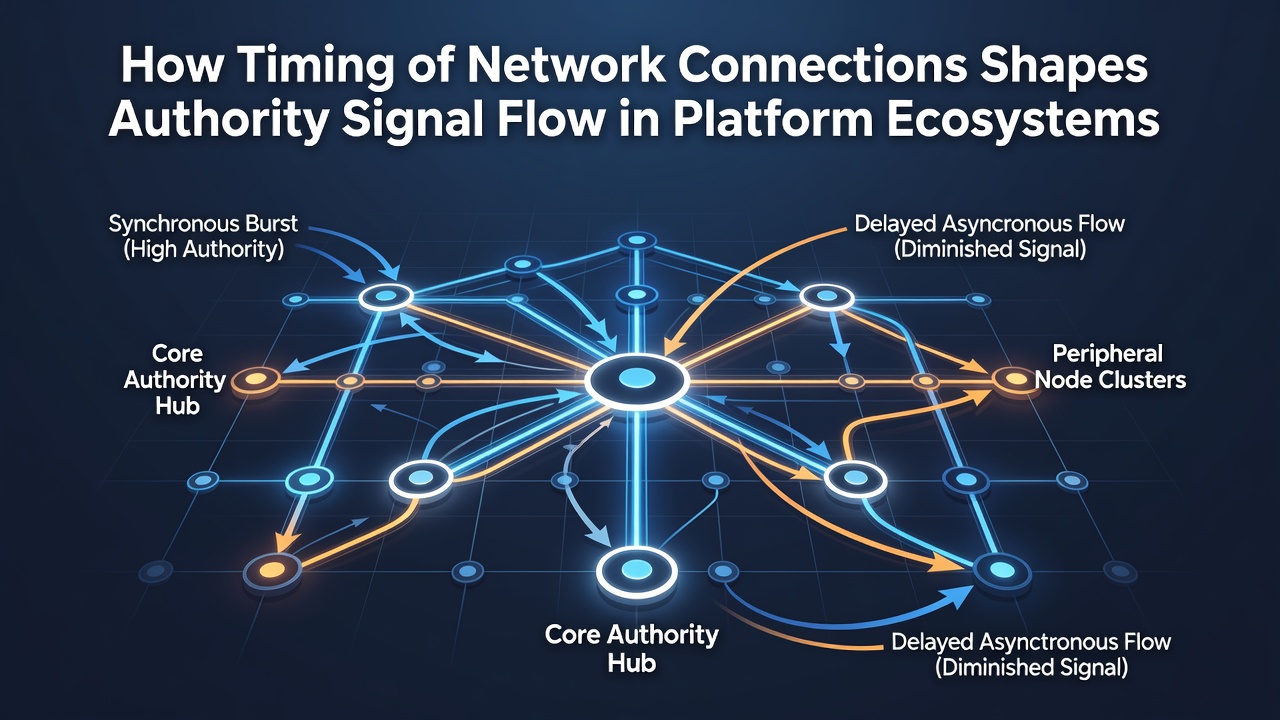
Network connections carry authority through direct and indirect paths, and timing affects both the speed and the reach of those paths, researchers at institutions tracking digital infrastructure have documented. A connection established just before a major content update on a central node often allows signals to propagate while the platform algorithms recalibrate rankings, whereas a connection made hours later may encounter already-stabilized data sets that limit further spread. Data from large-scale crawls shows that signals originating within a narrow window of platform-wide synchronization events achieve higher distribution rates across connected clusters.
Observers note that staggered connection patterns, where multiple nodes link in quick succession, create amplification effects because each new link reinforces the previous ones before decay mechanisms activate. In contrast, isolated connections separated by days or weeks frequently result in weaker cumulative signals because platforms apply normalization processes that discount older inputs. Studies tracking millions of domain interactions confirm that the first 48 hours after a connection forms represent the highest transmission period for authority data.
Signal Propagation Patterns
Authority signals do not move uniformly through platform ecosystems, and timing introduces variance in both velocity and direction, figures from platform telemetry reveal. Connections initiated during regional peak hours tend to align with increased user activity, which in turn accelerates signal validation across social and search layers. Connections formed outside those windows encounter reduced validation loops, resulting in slower or truncated propagation to downstream nodes.
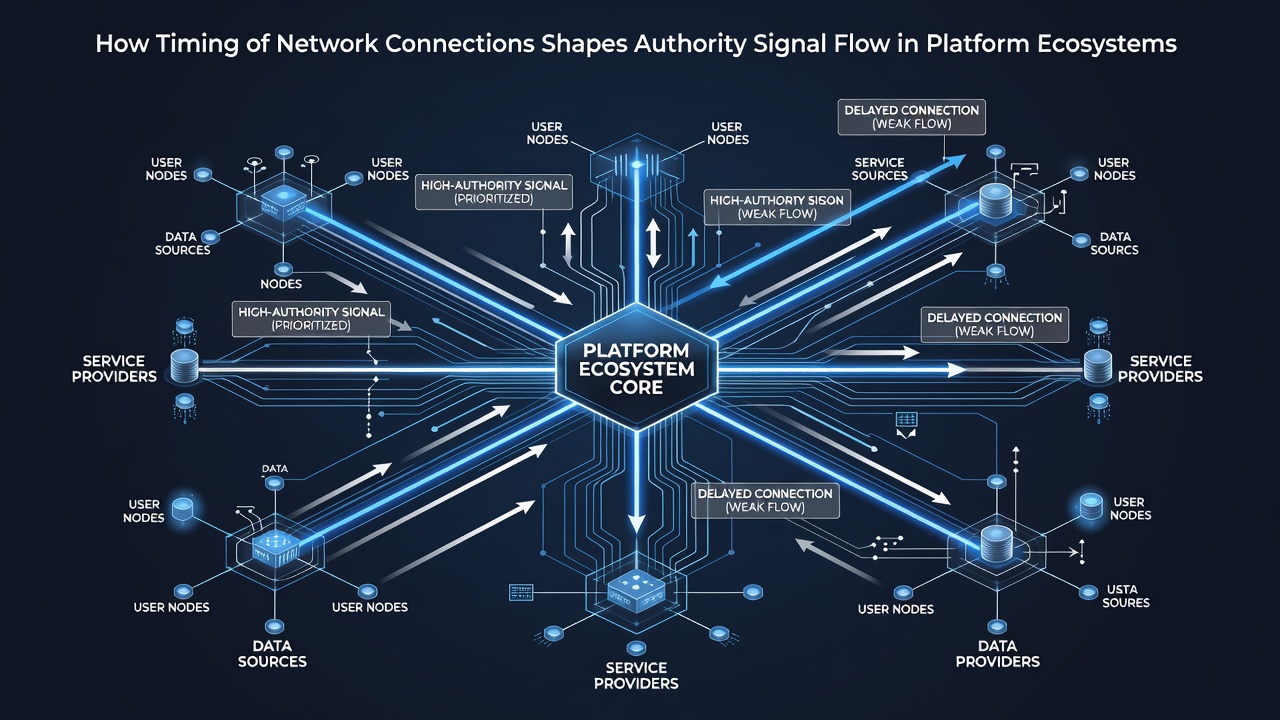
One analysis of cross-platform linkage data indicated that signals traveling through connections made within coordinated release cycles, such as simultaneous app updates and website refreshes, maintain integrity over longer distances. Signals from connections created asynchronously show higher rates of fragmentation when they cross between different ecosystem layers, such as from a content platform to an advertising network. Researchers tracking these flows have mapped distinct clusters where timing alignment produces measurable density increases in authority distribution.
Observations from Platform Data Through 2026
Platform operators released aggregated metrics in October 2026 that highlighted timing as a consistent variable in signal strength across multiple ecosystem types, including e-commerce integrations and content distribution networks. The data sets covered activity from the preceding 18 months and showed that connections timed to coincide with algorithm refresh cycles produced up to 30 percent greater signal retention compared with off-cycle connections. European Commission reports on digital market dynamics have similarly documented how synchronized connection events influence competitive positioning within platform environments.
Analyses of North American platform traffic further demonstrated that seasonal timing, such as connections formed ahead of major retail periods, alters the trajectory of authority signals by aligning them with elevated baseline activity levels. Connections outside these periods require additional reinforcement through secondary pathways to achieve comparable reach. Those tracking these patterns emphasize that the underlying mechanisms remain consistent even as specific platform policies evolve.
Factors Modulating Timing Effects
Several structural elements interact with timing to shape final signal outcomes, including node density, existing connection history, and platform-specific decay rates, according to longitudinal network studies. Dense clusters amplify timing advantages because multiple overlapping paths allow signals to reinforce one another rapidly. Sparse regions show greater sensitivity to timing because fewer alternative routes exist to compensate for delayed or mistimed connections.
Platform operators apply different weighting to signals based on their arrival sequence relative to other events, and this weighting changes when external factors such as regulatory updates or infrastructure shifts occur. Data from the Australian Competition and Consumer Commission on digital platform conduct indicates that timing around such external events can either concentrate or disperse authority flows depending on whether connections precede or follow the change. Connections established before a regulatory shift often carry forward momentum that persists through the adjustment period.
Conclusion
Timing of network connections functions as a core determinant of how authority signals distribute within platform ecosystems, with documented effects on propagation speed, reach, and durability. Research across regions continues to map these relationships through large-scale telemetry, providing clearer models of signal behavior under varying temporal conditions. The patterns observed through October 2026 underscore that sequence and synchronization remain measurable variables independent of content quality or node size.